Tuesday, January 26, 2010

New Kicking Mule Workshop


I capped off last week by catching up with Patrick Goodspeed who runs the re:change showroom in NYC which represents brands like Kicking Mule Workshop, Left Field, Triple Works, and Real Japan Blues. We sat down with his wine and my Nat Sherman MCD smokes to talk denim. There are better ways to spend Friday night but I cannot think of many.


He showed me the new jean of Kicking Mule Workshop, a well loved brand carried by stockists like Oak, AB Fits, Odin, Revolve, United Arrows, and many more. The new model is called the 1980 and boasts some interesting features. Note: the particular 1980 jean featured in this post has been through a quick rinse but raw will be offered.


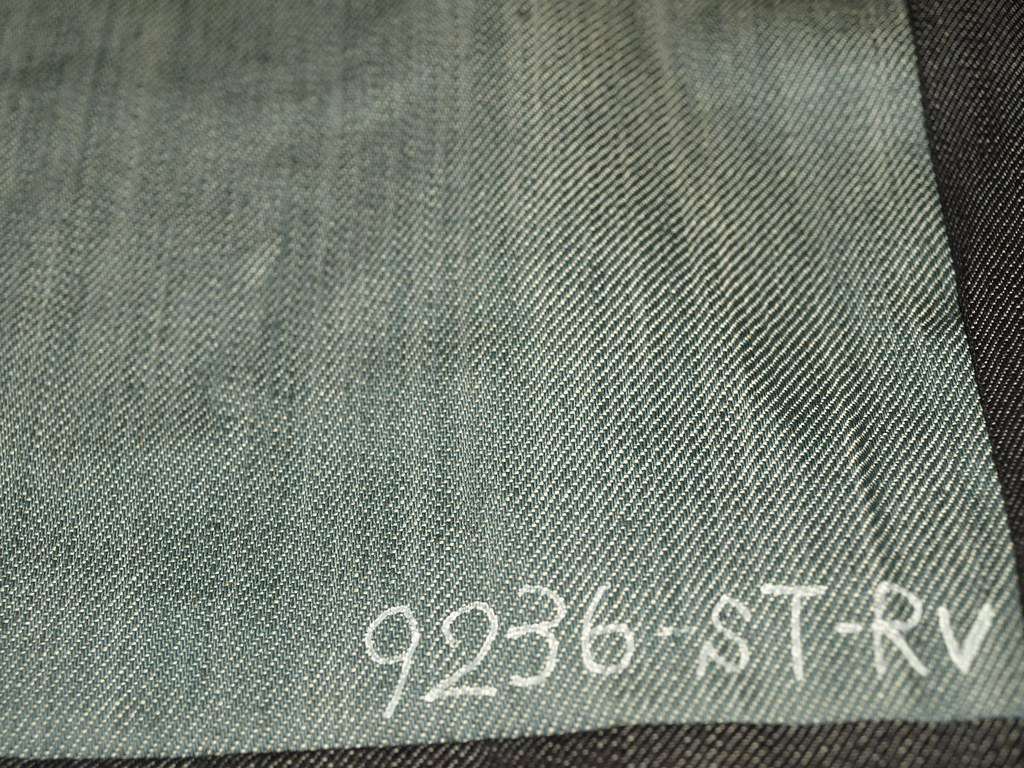
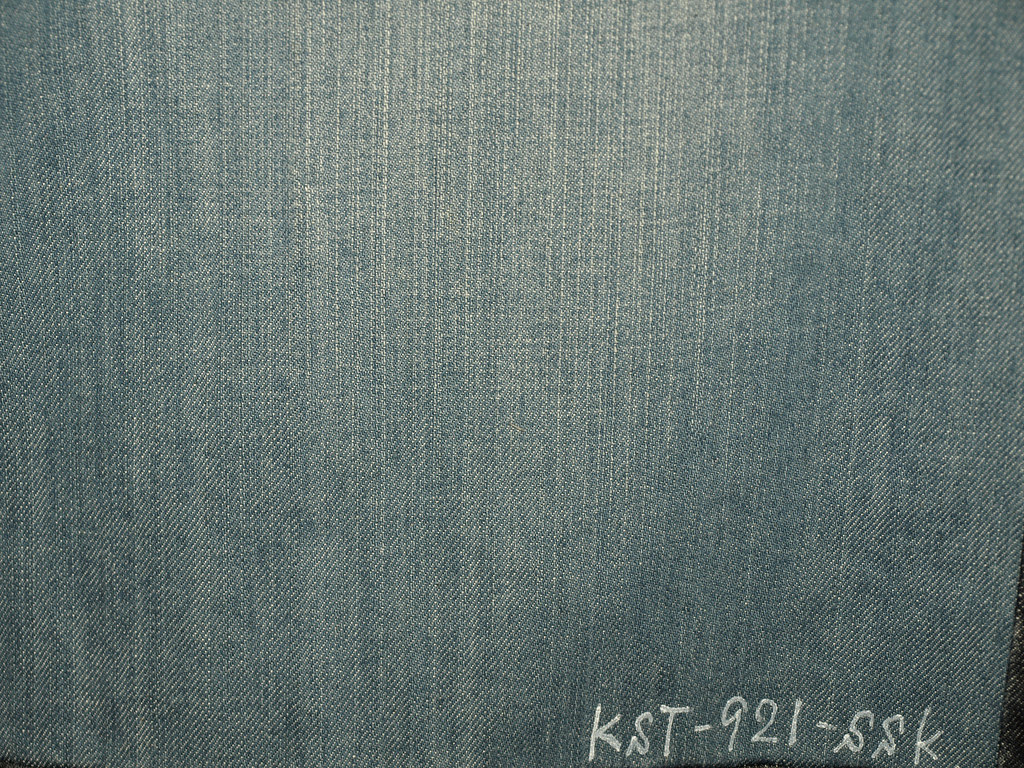
The fabric is a Japanese, heavy weight, natural indigo, organic cotton, left hand twill, selvage denim. It can be prominently shown off with a cuff as the busted side seams measure 1.75". This will make for quite a wide traintrack, sideseam fade.


Selvage fly.


Alloy hardware.


Hand hammered rivets. The exposed selvage coin pocket.


Beltloops inserted into waistband with very prominent ridge between stitches. They will wear in very nicely.


Deer skin leather patch.


Hidden back pocket rivets. Half lined back pockets.


Selvage runs all the way up to waistband.


For the full experience we recommend checking out the new Kicking Mule Workshop jean in person when it arrives in stores later this year.

Labels: , , , , , ,

Sunday, October 05, 2008

LaLa Land Dispatch:
Japanese Denim Showcase – Sept 30 – Oct 2

DenimTech Laundry - Vernon, CA – For a few days last week, beneath an unassuming wrapper of industrial concrete, Japanese trading group Mitsui was invited to showcase some of the most fantastic textile goods ever to grace this indigo aficionado’s eyes. A parade of denim’s best and brightest passed through the Denim Tech offices to sample this divine product.

On the miraculously hot afternoon of September 30th, I made my way over to DenimTech. Beneath a scorching smoggy greenhouse gas dome just south of Downtown Los Angeles, Denim Tech Laundry lies smack dab in the middle of the glorious city of Vernon. Close neighbors to such illustrious tenants such as “Forever XXI” and Farmer John Pork products. DenimTech is a joint venture by Mr. Shinzo Suzuki (formerly of uber-laundry Caitac) and Matsuoka, a leading Japanese apparel manufacturer that fabricates much of Uniqlo’s quality goods.

For some time Suzuki-San has presented these showcases in the interest of connecting American designers and companies with purveyors of amazing Japanese textiles. I recall one event several years back when he organized a large event of many mills and trading companies including Nisshinbo, Kuroki, and Kaihara (if memory serves). While the scope of the presentation has become smaller and more intimate, the quality and selection is no less impressive. This time around he has have chosen to focus on two of my favorite fabric mills on earth, Kaihara and Nihon Menpu.

After the lovely DenimTech receptionist mercilessly butchers my name, I take a seat and prepare myself… lazily admiring the wear patterns on my Nihon Menpu selvage denim jeans.


First up I was ushered in to visit with Nakano-San from Kaihara. Kaihara is an amazingly modern, top of the line mill with roots firmly embedded in the history of Japan’s Textile industry. Originally established to create traditional indigo textiles, especially Kasuri cloth, in the early 20th century, they began making denim in Japan sometime after WWII, when the demand for surplus and vintage American jeans became so great that enterprising Japanese businessmen realized the need for indigenous denim cloth and brands. Today they are the largest denim mill in Japan and supply many of its domestic manufacturers, like Edwin, with much of their fantastic goods. With proper research and fact checking, I may write up something a bit more extensive down the line…


Kaihara is well known for its quality, consistency, and exceptionally rich indigo shades. If you stare at enough fabric samples of denim like I do (hundreds and hundreds every season), you begin to really appreciate the subtlety of how good or bad the execution of indigo dyeing can be. Kaihara is one of those mills that has something of a magical formula and some serious gurus on their dye range that consistently turn out gorgeous indigo creations.


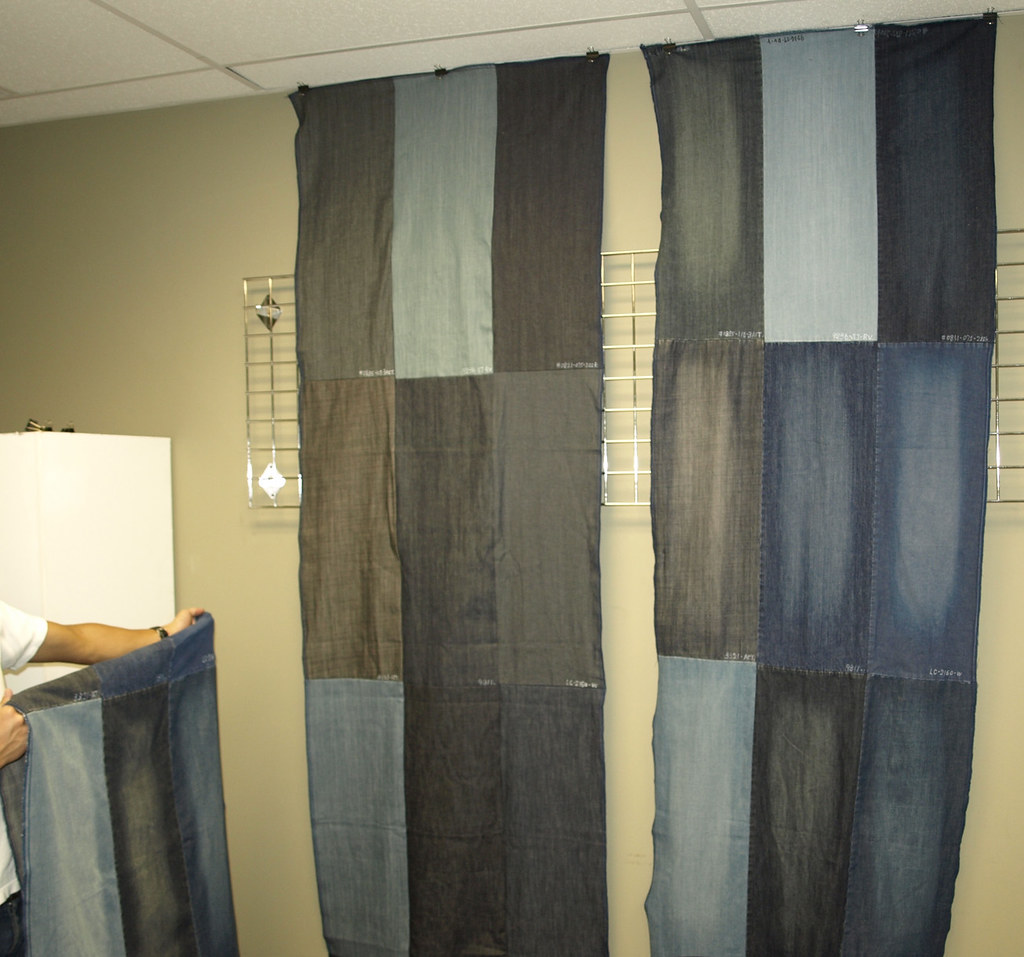
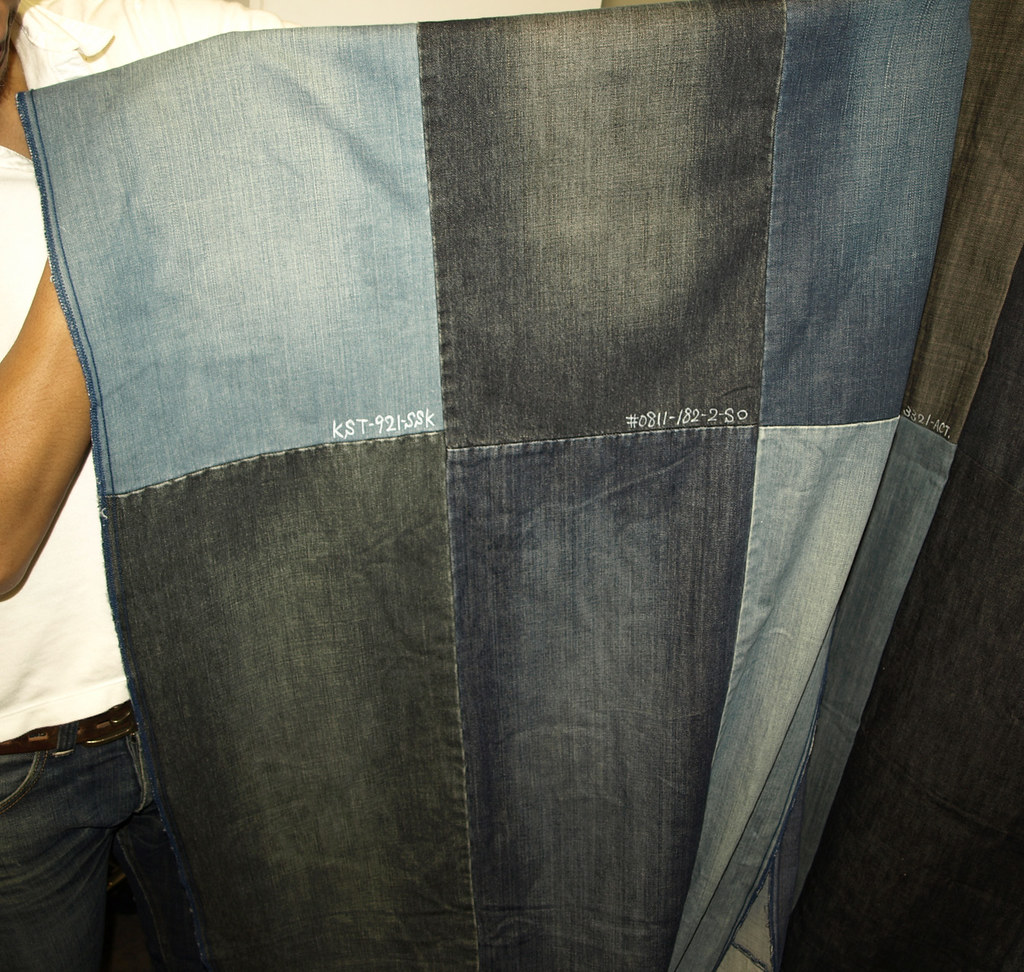
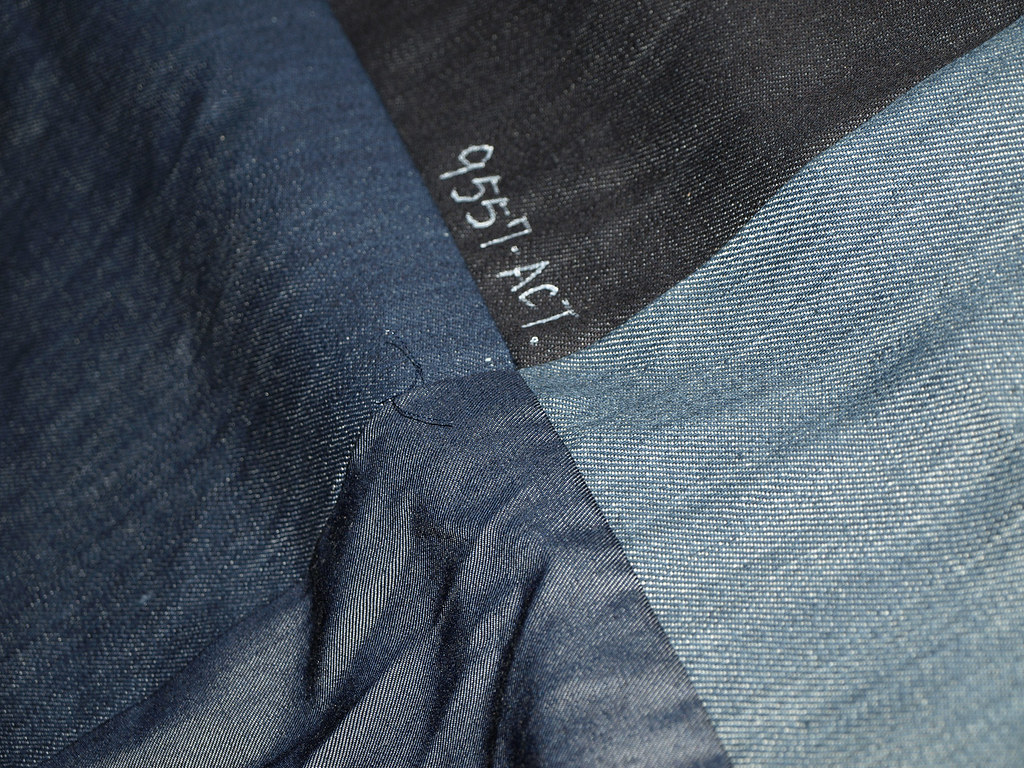
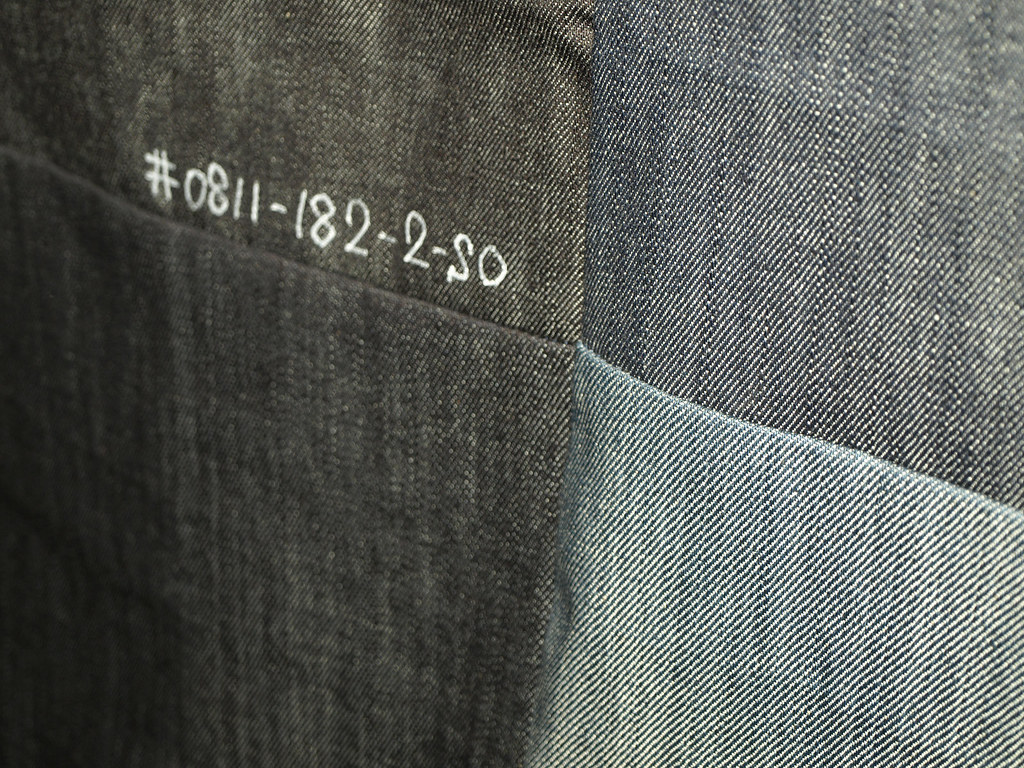
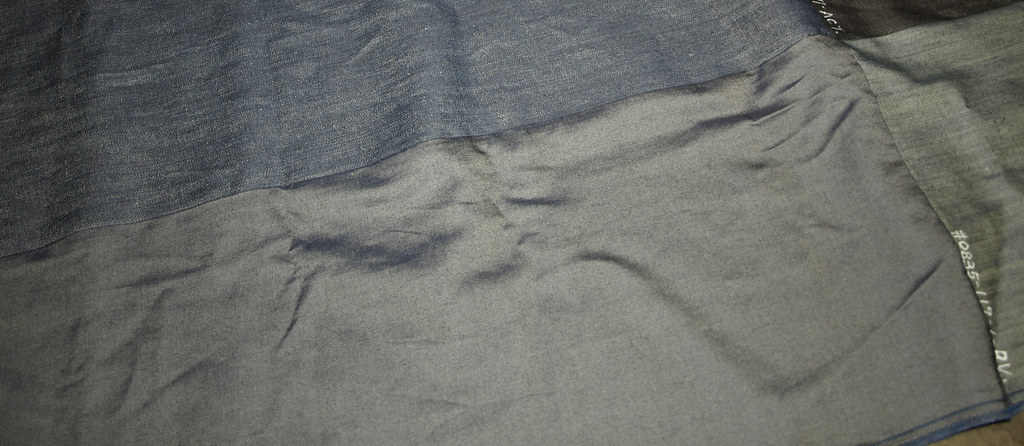
In the Kaihara room, two double decker rolling racks chock full of fabric headers greeted my eyes. Along the wall they had two immense patchwork fabric blankets draped from the ceiling and collecting in blue folds on the floor. The fabric blankets, one raw and one sanded and enzymed, showcased the great variety of weights, shades, constructions, and character in their denim selections.


In addition to the perpetually wonderful selection of classic rich indigo wide denims and selvages, Kaihara had some interesting new things worth mentioning. They had some really nice lighter shades of indigo achieved through fewer dips on the dye range rather than extended washing. These were developed specifically with the USA market in mind and I think could be great for the 70’s retro vibe we’ve been seeing in brands like Dittos and Current Elliot. These lighter sky blues make a nice alternative to deep dark indigos that have been so prevalent these past few years. But, of course you don’t get the intense chip off and high/low you will see on your raw 14oz pure indigo super dark goods. Nakano-San feels this lighter denim trend will be big in Japan for coming seasons.


Another really interesting product I saw was a cotton/rayocell blend denim in a very light (circa 8oz) 2x1 construction. This rayocell is a similar fiber to rayon and tencel, being made from cellulose fibers processed down into a yarn that is soft and has a great sheen to it. Further they referenced its low impact ecological process that uses a recycling system to utilize the same water over and over again during processing.


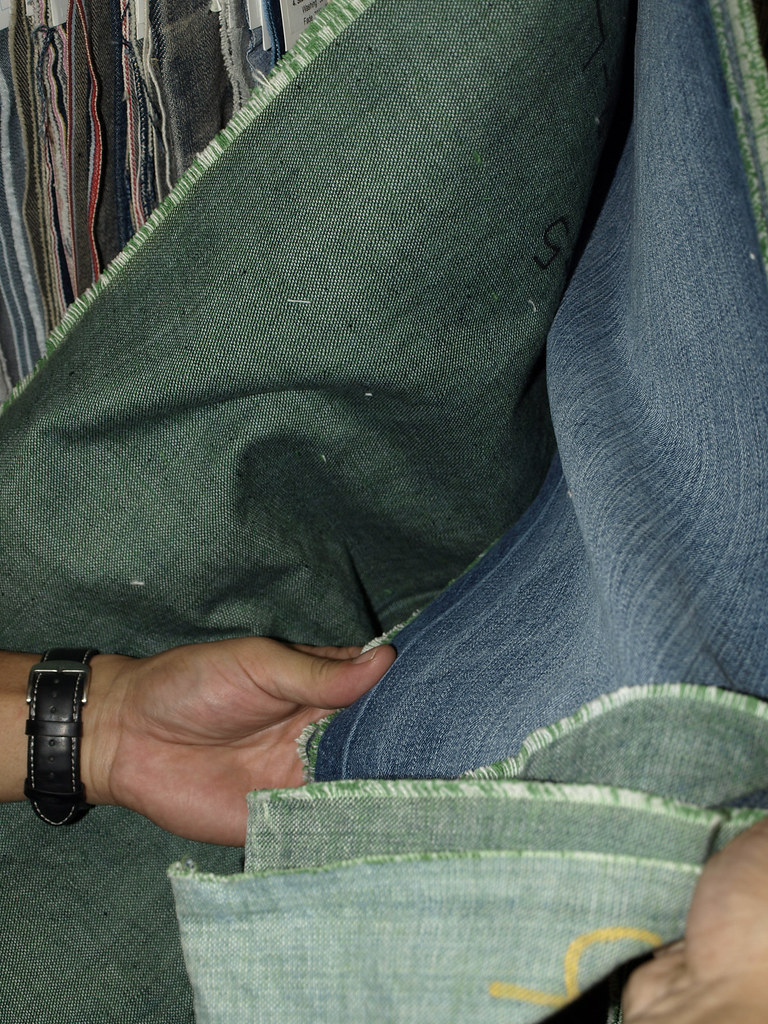
In perusing the racks I also found some really interesting hidden gems.

Colored Weft denim (Red and Green Pictured). They also had Yellow.

As with much of the industry in the past couple years, Kaihara was showing many organic fabrics and more eco-friendly products. However, they were saying that the demand for organic products has been steadily decreasing and they wonder if the trend may be on its way out. This desire for organic, eco-friendly, sustainable, and similar marketing monikers to attached to denim, seems to be relegated to America and Europe. Japanese and other Asian customers apparently aren’t willing to pay the extra money for this type of product. With the economy in freefall, I wonder how much longer Americans will buy into this trend as well?

Lastly, no surprise, business is down. The depressed dollar to yen exchange rate is also making importing Japanese goods all the more costly.

To be continued...

Labels: , , , ,

Sunday, July 13, 2008

Tokyo Eye on Denim

Tokyo Eye is the Japanese TV show for expats that brought us special features like Maid Cafes, Gothloli, Akihabara Idols and now "Japanese Jeans...Curry Rice." The first half of the program features Blue in Green's Gordon Heffner giving the viewer a tour of Japan through the lens of a denimhead. Particularly interesting is the visit to Yoke Design whose artisans custom distress jeans using sponges and towels.


If above video does not load you can see the full denim segment on my Google Video here.

Google Video Link

Yoke Design Webpage

Blue in Green Website

Tokyo Eye Website

Labels: ,

Friday, January 25, 2008


The FULLCOUNT Grand Slam

First of all FULLCOUNT is a fashion brand complete with fashion shows and photoshoots. Now let me say they make some fine jeans that would make any denim purist wake up sweating indigo. Part of it comes from the fact that founder-owner Mikiharu Tsujita (humbly self-introduced as Miki) is well versed in denim.

We sat down for tea last week in New York where I showed him the book, "History of Japan Jeans." While flipping through it he points out various veterans he's worked with (some he calls masters) over the years. He begins to tell stories. The one I found especially interesting is about the company he forged with sweat and tears.

FULLCOUNT s one of the Osaka 5, a group of five pioneer brands (Studio D'Artisan, Denime, Evisu, Warehouse, and FULLCOUNT) founded in Osaka for the pursuit of the best denim as seen through their respective lenses.

Tsujita recounts his younger days in the 80’s working in the famous vintage shop Lapine and traveling in the US with co-worker Hidehiko Yamane (of Evisu fame) to hunt for vintage denim garments. At the time vintage Levi's and the likes were already exchanging hands (American to Japanese) at hefty sums and it was difficult finding enough right pieces at the right prices to stock popular "used stores" like Lapine across Japan.

As a result in '89 Tsujita and Yamane launched the brand Rodeo backed by Lapine's owner. It offered raw denim with details that nodded homage to the vintage jeans they loved. Rodeo was famously different from existing brands like Studio D'Artisan and Denime, who pushed similar products but were supported by strong financial backing. It was known as a homebrewed label that distributed in vintage stores for likeminded individuals.

But in 1991 the ambitious duo splintered off and formed Evis (later renamed Evisu). I could not help but ask him to talk about the rumors of Evisu having purchased a vintage American-made shuttle loom (having heard this myth repeated as legend twice the prior day was strong motivation). It is reassuring to hear that the rumors are indeed not true. Evisu began making jeans using denim made on Japanese-built Toyoda looms.

Due to differences in brand direction (Evisu is now known for its colorful handpainted logo's that cover the backpockets; its mascot is the god of money) Tsujita sets off on his own purist's path. He stares off to the side with a distant look as he recalls what went through his mind at the time. Without substantial funding he knew that his next move would either make or break him. It was this feeling of being up at bat with 3 balls and 2 strikes that led him to name his lifework FULLCOUNT.

Since making that swing FULLCOUNT has become a popular Japanese brand offering both knits and wovens for men and women. Jeans from the line have features like natural indigo, Zimbabwean cotton, hidden rivets, back buckles, 100% cotton threads (for vintage purists) and of course selvage. But it is the essence of the vintage jeans that he wore as a youth that he tries to capture. In describing the FULLCOUNT denim he mentions soft and comfortable as being the most important points. As he models the jeans he's broken-in over 5 years he tells me this is the point when the jeans are the most comfortable. He emphasizes the belief that fashion trends change but comfort does not. Their brand concept states "FULLCOUNT is not influenced by fast-moving fashion trend."


Caption: Miki in his 5-year FULLCOUNT jeans standing next to his collection.

Yet he insists FULLCOUNT is a fashion brand. His customers, while appreciating the vintage details, use his products to primarily fulfill fashion needs. This contradiction leaves me a bit perplexed. But after only half a minute I decided I don’t need to fully understand it. Balances and struggles between ideas contribute to denim’s character. You can analyze it all day long (and we do sometimes) but in the end all you need to do is wear it to get it.


Caption: The jeans ripped on his recent travels; New York is a tough city.


We talk about his arc designs post and pre Levi's cease-and-desist letter (sized like a book but doesn't read like one).


FULLCOUNT Website
Special thanks to Kotaro Tanaka
Special thanks to Lat40N

Labels: ,

Friday, January 26, 2007

BIG Assurance

Our friends at Blue in Green (BIG), premier denim retailer in NYC, sends denimheads around the globe the following message today.

Hello,

This is an announcement concerning all of our denim products.

All of our denim products imported from Japan or any other country will no longer contain tabs sewn into pocket seams made of any type of material and of any color including leather. They will also be void of any back pocket stitching or leather patches which infringe on trademarks or copywrites registered with the United States government. These three infringements include:

-Any piece of fabric or material sewn between two structural seams of a garment

-Back pocket stitching (arcuate) which could be mistaken for a Levi's arcuate or similar enough to cause confusion

-Leather patch with an image of two horses (and apparently anything else) pulling apart a pair of jeans.

All of the companies we currently sell in our store fully understand this matter and will comply by removing tabs, pocket stitching, and leather patches which infringe on or are too close in similarity to US registered trademarks and copywrites. We are also complying by no longer selling items with these infringements in place.

**All items are now being sold void of these three trademarks and copywrites held by Levi's Strauss and Co.

**We've been in contact with each of the brands we deal with on removing back pocket tabs for future products, either replacing back pocket arcuates with a different design or eliminating the arcuates completely, and in the case of our beloved pigboy champions Studio D'Artisan there will be a re-working of the leather patch due to the current infringement of two pigs pulling apart a pair of jeans.Fortunately what will not change about these products is the most important thing about them and the main reason we wear them and that's the DENIM!

When some denim companies speak of brand identity they rely on exterior flaggings or markings or shapes. In the case of these companies which we support they're identity is their denim. They pour blood, sweat, and tear into producing some of the most unique and revered denim on the planet. When we speak of these brands its usually about the texture, weight, and color of the denim. We're able to identify them just by sight and feel. So while these brands will be void of familiar markings they will still retain the most important aspect of their product and that's the denim.We'll be providing further information and developments as they occur. Thank you for your support in this time of change and transition.

Regards,
Gordon Heffner
Yuji Fukushima
Blue In Green

Labels: , , , ,

Thursday, January 25, 2007

Blue: Where Did All the Denim Go?

I can't think of a better way to kick off the new year than to see what new indigo dyed cotton goods are coming our way. Unfortunately at this year's Blue, the NYC buy/sell show that revolves around premium denim, there wasn't a whole lot of denim to get my heart racing. Those who exhibited at Blue last year but were MIA this time include Iron Army, Blue Star, Denim Design Lab, and Sling & Stones. Reasons for the no-show include budget-VS-orders, politics, or not making the cut for this year's show.

Apparently Blue, which may have started out focusing on denim, has had to add to its product mix to appeal to the denim buyer who may also be shopping for rock and roll inspired accessories. This is a reflection of designer jeans sales leveling off. Retailers didn't seem as eager to pick up several new lines right off the bat just for denim.

So now that Blue is being positioned as a sportswear marketplace what does that mean for upcoming shows? This question grows important as Blue plans to enter the international arena by penetrating cities like Tokyo. Mike Sampson, who runs the Blue show for ENK, says we can expect product categories like eyewear, jewelry, and small leather goods in the future.

But make no mistake about this; denim lifestyle is still at the core of the show.

Most notable at this recent show include a Japanese denim company called Dania Japan & Co. Using piece goods woven and dyed in the famous Okayama city Dania offers raw and washed jeans and jackets inspired by vintage Levi's in various cuts for men and women. My favorite pair from their line is unfortunately a jean I can never wear out (though I'd gladly sleep in it). It measures 66" in length and is said to fit a 74" waist. The novelty item is available for $1850 raw or $2200+ vintage washed. Please examine exhibit A for time-stamped evidence.


It's selvedge too.


But for those of us who don't happen to be giant lumberjacks I recommend a straight fit non-washed selvage denim that was yarn dyed by hand (wholesale $305; double for retail).


Surprisingly the washed/destructed model is the same price but that's so early 00's (WHAT you haven't gotten into raw selvedge denim yet??).

If you don't care for the hand-dyed treatment but still want some amazing 14 oz. denim their regular "slub yarn" line wholesales for $105 raw to $190 washed. As the name indicates you get a garment that looks quite flat when raw but fades to reveal some gorgeous slubby vertical lines.


(sorry to disappoint but none of above pictured hands are mine)

Fits include straight, bootcut, and tight straight. For your softer side washed left-hand twill jeans are also offered for a bit more. Here's some official denim pr0n.

Vintage-inspired "Slub Yarn Denim Half Coat"


Vintage-truckers-inspired "Slub Yarn Left-hand Twill Selvage Denim Jacket"

Aforementioned selvage denim yarn-dyed by hand

"Slub Yarn Selvage"

The Dania group notes that their stateside debut has been met with warm reception and I wish them much success. The products they offer speak volumes about Japanese denim quality and I hope that message doesn't get lost in the sea of designer blue jeans all around. Although Japanese brands in the US currently cater to a very niche market Blue needs to be applauded for warmly inviting Dania into our marketplace (exhibitors screening is quite vigorous). This is an important first step towards improving consumer expectations of quality and design integrity in the US.
Blue ran from January 21-23, concurrently with The Collective show in New York City.

Labels: , , , , , ,